Where I came in
Sales agents in a multinational telecommunications operator’s Brazil operation built one proposal across seven tools. They quoted small, mid-size and large companies across the country. Each service category had its own quotation system. Contracts, approvals, and orders lived somewhere else. Agents handled 20 to 30 customer interactions a day, and a quote could take an hour. I joined after the first releases, beside the Design Lead, for the 18 months that followed. My job was to decide which gaps were severe enough to ship, and to shape that roadmap with research and design.
The decision
Agents built one quote across seven tools. There was so much flexibility that a new agent could not tell where to start. Approval lived in side conversations, outside the quote. On a deal with several sites, the same fields were typed again for every site.
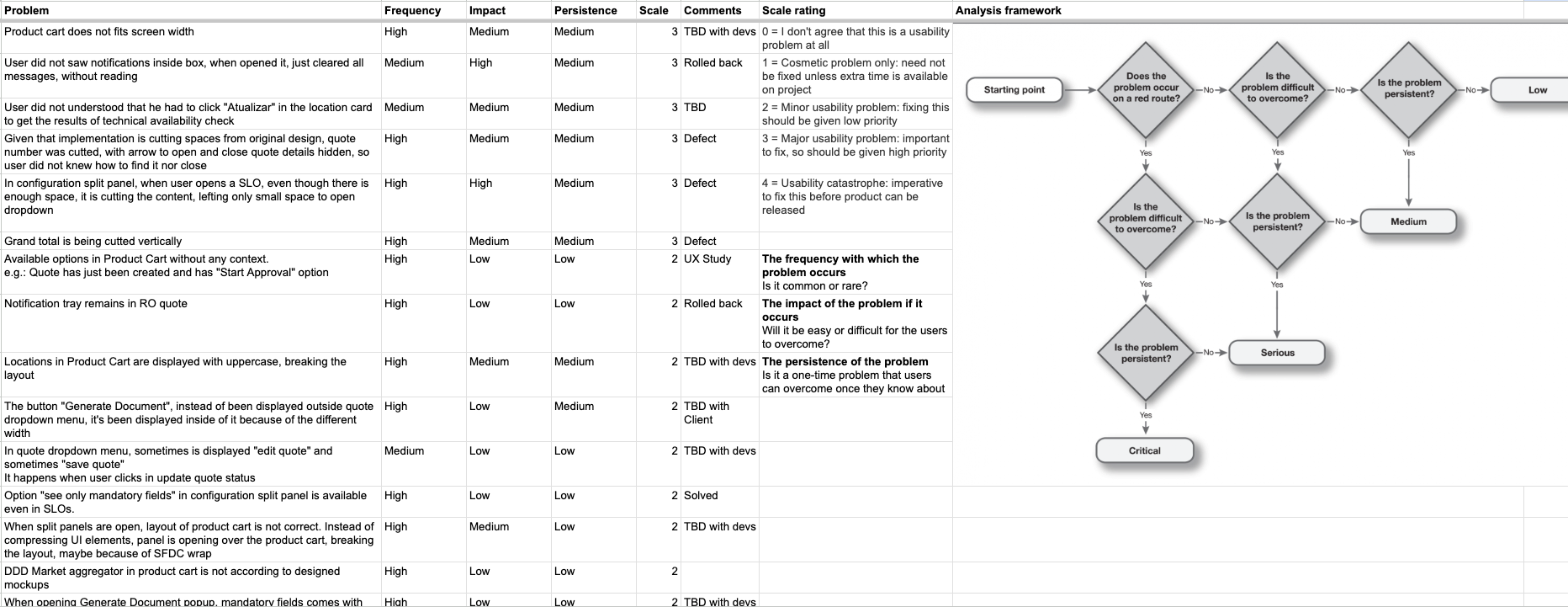
A quote took an hour because of that. We scored what we found by how often it happened, how much it hurt, and whether it stuck. Severe problems that were cheap to fix shipped first, and the long list of other opportunities waited. When the backlog asked for another screen, the Design Lead and I kept the product from growing a new feature. We were aiming to simplify things most of all.
We reorganized the quote into three stages: Find Product, Configure Solution, Generate Contract. Approval status and progress stayed visible inside that path, so agents stopped leaving the workspace to ask where a deal stood.
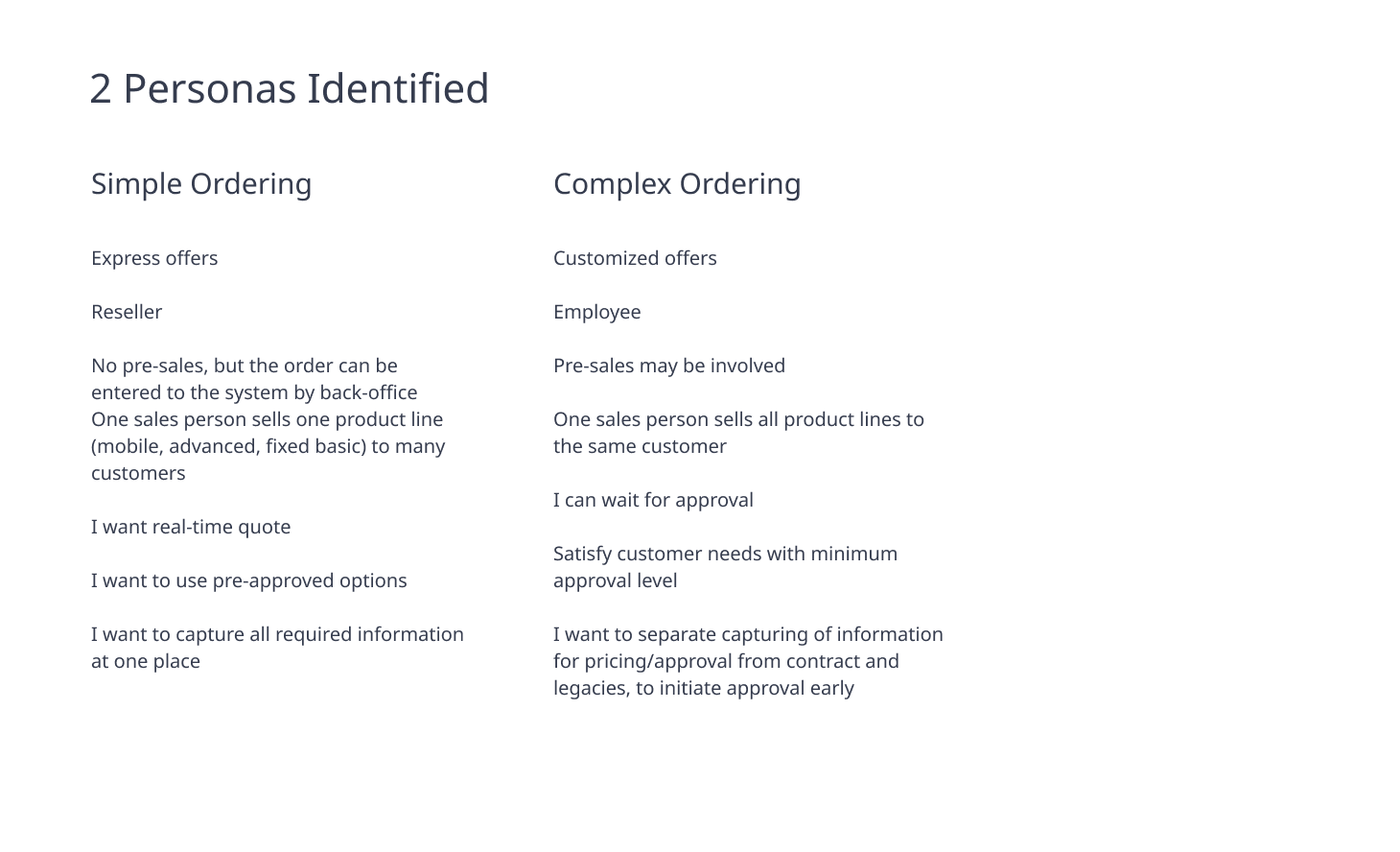
Two ways of selling kept showing up. Express quotes, done while the customer waited, with no customization. Custom deals, which could sit for approval for more specific scenarios. The three stages had to carry both. Averaging them into one happy path would have broken the slower deal.

The quote
Find Product is a catalog beside the open quote. Search, filter, add, without leaving the deal.

Configure Solution covers multi-site deals. Several sites, one side panel, shared term, technology, and billing rules. The agent stops retyping the same fields per site.

Renewals sat in the same place. Search the install base, select what changes, decide how a bundle is renegotiated, then continue the quote.


Results
60 min → 15 min
A quote fell from about an hour to about fifteen minutes on average, customized quotes included. Fifteen minutes was the average, not a time every quote had to hit. The agent stayed in one workspace instead of moving across seven tools.
12 hours → 4 hours
New agents had trained across three mornings, four hours each. That became one morning. Twelve hours became four, and the path was easier to learn.
Experienced agents used the platform for three months before it spread across the organization. Those three months were there to see whether it held in every scenario, to find bugs, and to find improvements that could enter the backlog.